Category: Uncategorized
Communications Director
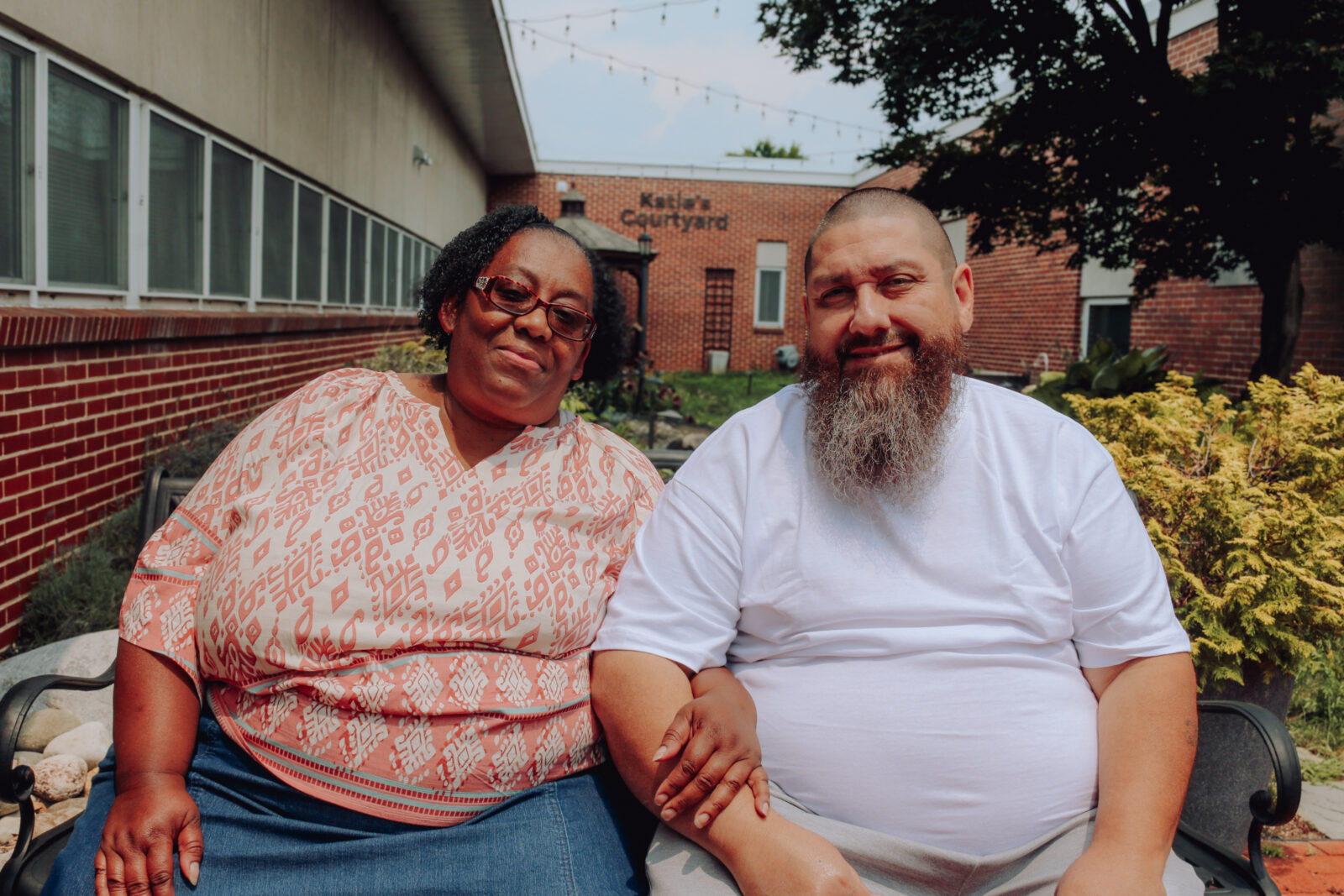
For Amelia and Ernest Espejo, life has brought both deep joys and unexpected hardships. In 2016, a job placement sent them to California, where they were excited to begin a new life on the West Coast. But almost immediately after settling in, Ernest was struck with an illness that ultimately forced their family to return home.
What was then supposed to be a temporary stay at the Red Carpet Inn turned into a year-long wait as they both worked with temp agencies to find something permanent that would meet their needs.
“Necessity brings forth direction,” Amelia said as she reflected on that season of their life. “When you are in need, it makes you think of creative ways to get it done. We went to thrift stores and found a small hot plate, skillet, and crockpot to cook with…We have health issues, so we worked hard to cook and be wise in how we cooked our food.”
Getting ahead was incredibly tough – the cost of the room was Amelia’s entire paycheck, and in the meantime, they needed support that they couldn’t seem to find.
“We were just looking for help, in any way we could get help…but it seemed like everywhere we would go, we would hit a wall.”
One day, The Factory Ministries came up in one of Amelia’s searches, and they got connected with an advocate. Through that relationship, resources such as the market, plans for housing, and help with a security deposit provided relief and support that they had not yet experienced since coming back to Lancaster. “I just thank God for The Factory,” said Amelia, “our main concern was the stability…just trying to find some stability in our lives.”
In May of 2018, they were finally able to move into an apartment, and both had steady jobs. For a short season, life had the stability they had been craving. But then in August of 2018, Ernest had a stroke. With only one income, the pressure of surviving returned, but they were again able to find resources at The Factory – this time with assistance in applying for disability as well as access to the food market.
Amelia remembered how she would pray for specific things during that season: “Lord, I would really like an avocado…and sure enough, there would be avocados at the food bank. Or I would have a recipe I’d want to try, and they would have what I was looking for.” The support of an advocate and connecting to a church during that time were also integral in making it through the difficulties they faced. “The two things that really helped me was my faith in God, and having the support of The Factory,” recalled Amelia.
Now, life looks a lot different for the two of them. They have both completed educational courses that have changed their career opportunities, and they are looking forward to being able to help others with the empowering resources they have received.
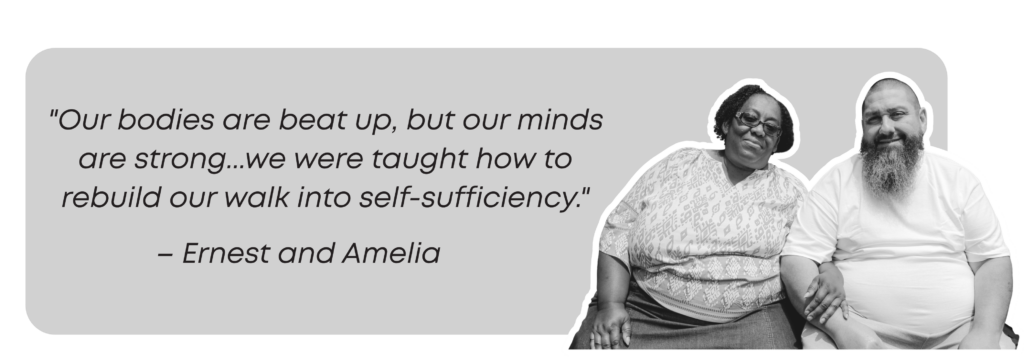
“God comes first in everything,” says Ernest. “Our bodies are beat up, but our minds are strong. The classes we were able to take at The Factory were self-builders. They taught us how to rebuild our walk into self-sufficiency.”
Both Ernest and Amelia have worked incredibly hard in their journey to self-sufficiency.
“I keep saying, ‘How bad do you want it?’” says Ernest. “I cannot allow the Factory to become an easy crutch. We want to be proactive in our community and in our lives.”
Ernest shared that one of their big goals is to get off the disability that he received as a result of the stroke he suffered.
“First, I thank our Lord,” says Ernest, “and then I thank the Factory…I will never forget and will always appreciate what The Factory has done for us.”
Communications Director
Since her very first introduction to the Factory when her son began attending the Youth Center, Kristina has worked hard to take advantage of every opportunity offered. She remembers first taking a Getting Ahead class, in which she accomplished all the goals she had listed, lost 175lbs, and started going to one of The Factory’s partner churches, Grace Point.
It was “the most beautiful experience I ever had at a church,” she recalls.
Then life took a heavy turn when a son was diagnosed with brain cancer and a daughter lost her hand, but The Factory and Grace Point “always showed up with support…it was a blessing.” Things didn’t stay dark for long, afterwards Kristina was able to get her GED through The Factory, and then started college.
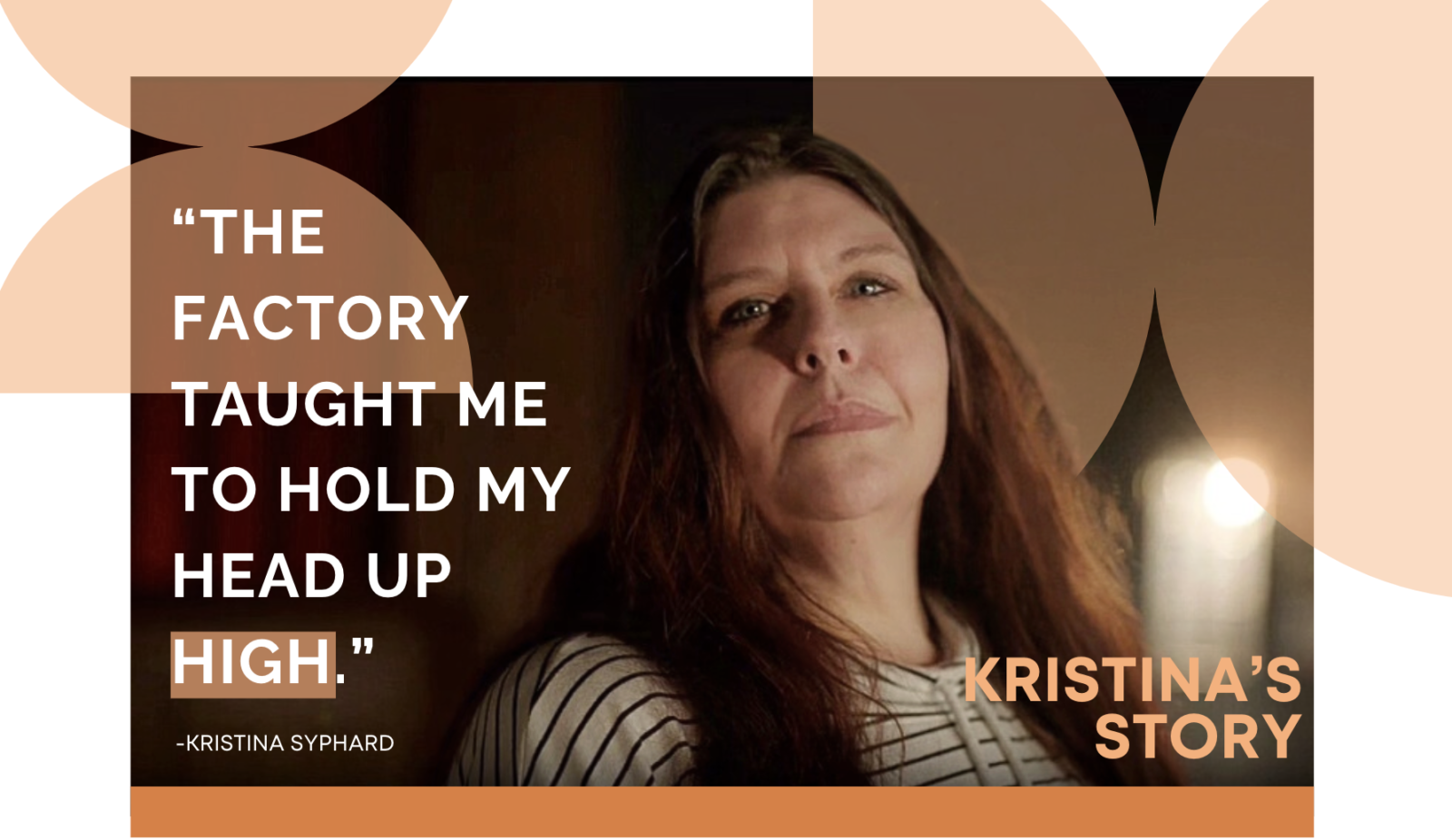
“Everything I experienced from the Factory and their partners was life-changing in so many ways…I learned to be strong and to hold my head high no matter what I was going through.”
When the pandemic hit, hardships began to strike again. “We lost our house and my daughter became suicidal, it was a really hard time… But The Factory was still there for me.” With a new housing program for families, The Factory was able to provide housing and support for Kristina’s family for over two years, and get them connected to a program that helped with the purchase of a car. Kristina and her family worked incredibly hard to maintain these programs by regularly attending appointments, and completing goals and requirements for each of the programs.
“Now my husband has moved up twice in lead positions at the company he found a job at, and for the first time in 27 years we make too much to qualify for food stamps…can you imagine the feeling? My daughter went from suicidal to straight A’s, and we are now touring colleges and she is taking her mental health seriously. I became a better wife and a better mom. All these years The Factory and their church partners have helped to lift me and my family up out of horrible situations. This community has come together to make something so amazing for people in my position. I’m honored to be a part of this community, of this blessing that was given to me. I am proud of who I am, of what I have done, and who I have become.”
Communications Director
In some seasons social work can be very disheartening.
The ultimate goal is that we will help to not just relieve the effects of poverty for our participants, but eventually help them to completely climb out of it. Eventually, we want them all to be completely empowered, resourced, and self-sufficient. But for so many we know they will never be able to attain that, this side of heaven.
It can be for a variety of reasons…age, health conditions…for some their mental health is just too tender, and for others it is a combination of all. For those participants, the acts of kindness, of consistent basic relief, and of knowing that they matter, are all extremely important parts of the work. But a larger picture is to see how the impact of kindness shown, of resources attained, of doors opened, and of understanding reached, has an even larger impact on the coming generations of our participants.
We might not be able to completely change the course of one individual’s life. But if that individual feels loved, cared for, and seen, perhaps they will tell their children about what they are learning, and bring them in to get support as well. And maybe if their children come in, and find that they are also seen, cared for, and loved, and they attain more resources, are shown more kindness, and provided basic relief…perhaps some of the cycle is broken.
And maybe the children’s children become involved, see change, and are taught to think differently… and maybe they grow up hearing more often: you can do this, there is opportunity here for you, there are resources available… and maybe more cycles are broken.
Maybe it takes generations for a family to completely find themselves released from the clutches of poverty. Maybe it takes generations for mindsets to change. Maybe it takes generations of consistent love to have an impact. That is why, even when there will not be any significant difference made in a single individual’s life, the work is still important. The work still must be done. Sometimes impact is generations in the making.
- 1
- 1-3 of 3 results